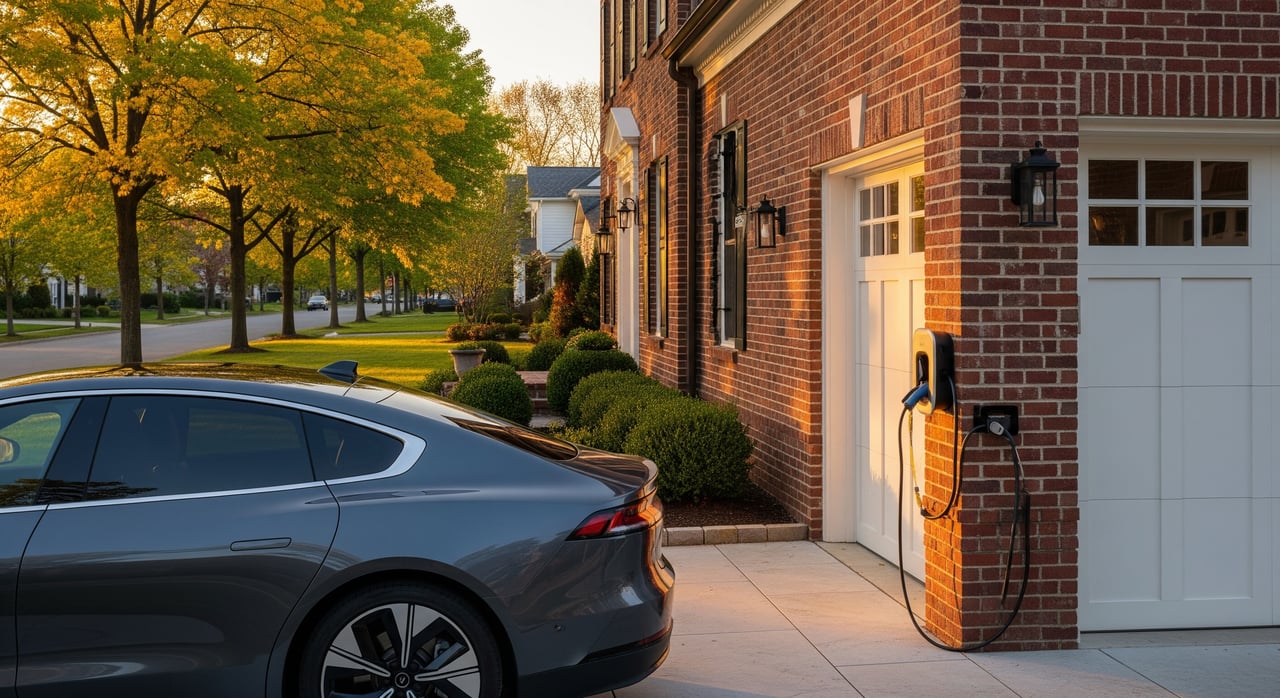
Thinking about charging your EV at home without breaking the bank? You are not alone. Many Westerville homeowners want the convenience of a garage charger but are unsure how to budget, permit, and schedule the work. In this guide, you will learn how to finance a Level-2 charger, what drives cost, how to compare quotes, and how to use off-peak programs to trim your electric bill. Let’s dive in.
Why plan your charger financing now
A Level-2 charger gives you reliable overnight charging and saves time compared to public stations. The biggest cost variable is your home’s electrical capacity. By planning the scope, lining up permits, and exploring off-peak rates early, you can avoid delays and spread costs in a way that fits your budget.
Know your home’s electrical capacity
Most older Ohio homes have 100 amp service, while newer homes often have 200 amp. Whether you need a service upgrade is the single largest driver of cost and timeline. A licensed electrician will perform a load calculation to confirm capacity before recommending your circuit size.
EV charging is a continuous load under the National Electrical Code. That means your circuit must be sized at 125 percent of the charger’s current. For example, a common 32 amp charger typically requires a 40 amp breaker with appropriately sized wiring. Your electrician and inspector will follow NEC Article 625 and local code during design and inspection.
Common scenarios
- Scenario A: Panel has space and capacity. A new 240 volt circuit is added. This is the simplest case and usually involves a single day on site.
- Scenario B: Panel has space but service is near capacity. A load calculation may point to a smart load management device or a full service upgrade.
- Scenario C: No breaker space or long run required. A subpanel near the parking area or trenching adds time and cost.
- Scenario D: Service upgrade needed. Moving from 100 amp to 200 amp requires utility coordination and adds weeks to the schedule.
What affects cost in Westerville
Your cost depends on scope, distance from panel to parking, and whether utility coordination is required. City permitting and inspection are part of most projects.
- New 240 volt circuit to an existing panel with a short run: typically 500 to 1,500 dollars.
- Level-2 charger supply plus basic installation: typically 800 to 2,500 dollars.
- Longer runs, conduit, trenching, or complex routing: typically 1,200 to 4,000 dollars.
- Subpanel installation or panel relocation: add 1,500 to 4,000 dollars.
- Service upgrade to 200 amp: add 1,500 to 5,000 dollars or more for electrical work. Utility fees for meter or service connection can add several hundred to a few thousand dollars depending on line or transformer work.
- City of Westerville permits and inspections: typically 50 to 300 dollars based on project valuation and local fee schedules.
These are typical ranges. Request written estimates to confirm your site variables before you set a budget.
Get and compare quotes the right way
Ask for two to three quotes from licensed, insured electricians with EV experience in Franklin County. Request a written estimate that details:
- Scope: new circuit only, supply and install charger, or full service upgrade.
- Charger model and whether it is hardwired or plug-in.
- Circuit size, breaker size, wire gauge, conduit type, and estimated length.
- Labor hours, hourly rates, and a materials list with unit costs.
- Trenching and surface restoration if needed.
- Permit fees, inspections, and cleanup.
- Utility fees for meter or service upgrades if known.
- Schedule for permitting and installation.
- Warranty terms for both the EVSE and workmanship.
- Whether the installer will help with enrollment for any managed charging program.
- Proof of license, insurance, and examples of local installs.
Compare quotes with identical scope. Confirm what would trigger a change order, like hidden conditions in the wall or a longer-than-expected conduit run. Ask the installer to program charging schedules and demonstrate the smart features on the day of commissioning.
Permits and timeline in Westerville
Most projects will need an electrical permit and inspection through the City of Westerville. The permit process typically takes 1 to 3 weeks, though it can be shorter or longer based on workload and project complexity.
- Site visit and written quote: 1 to 7 days depending on contractor availability.
- Permit submission and approval: 3 days to several weeks, typically 1 to 3 weeks.
- On-site installation: 1 to 2 days for standard projects and 1 to 3 days for complex jobs.
- Utility service upgrades: allow 2 to 8 weeks, depending on utility scheduling and whether transformer or line work is needed.
Build a small buffer into your schedule to account for inspection timing and any utility coordination.
Use off-peak charging to lower costs
First, confirm which utility serves your address. Many Franklin County addresses are served by AEP Ohio, but pockets of Westerville may have municipal or cooperative service. Your utility determines available EV rates, off-peak programs, and any rebates.
Typical offerings include:
- Time-of-use or off-peak rates with lower prices overnight.
- Managed charging programs where the utility can shift charging for bill credits or lower rates.
- Occasional rebates for smart Level-2 chargers or installation costs.
- Separate meter or submeter options for EV-specific rates.
Follow these steps to leverage these programs:
- Confirm your utility and ask if your address is eligible for EV or off-peak rates.
- Ask if enrollment requires a separate meter or proof of charger installation.
- Note the off-peak window and the rate difference.
- Choose a smart charger that supports scheduling and, if relevant, your utility’s managed charging platform.
- Have your installer set up the schedule during commissioning and show you how to change it.
- If a separate meter is required, coordinate that before final inspection to avoid rework.
A simple savings example
Use this to estimate your potential savings with off-peak charging:
- EV efficiency: 3.5 miles per kWh
- Daily miles: 30
- Daily energy: about 8.6 kWh
- On-peak rate example: 0.14 dollars per kWh
- Off-peak rate example: 0.08 dollars per kWh
Daily savings would be 8.6 kWh multiplied by 0.06 dollars, which is about 0.52 dollars per day, or roughly 190 dollars per year if you charge daily. If your driving or rate difference is higher, your savings increase.
Financing options that fit your plan
You have several ways to pay, depending on scope and timing:
- Pay upfront from savings for basic installs.
- Consider a home improvement loan or a home equity line of credit if a service upgrade is likely.
- Ask your electrician if contractor financing is available and compare APRs and terms.
- Check with your utility or local government for incentives, low-interest programs, or rebates that reduce upfront cost.
If you plan a broader renovation or panel work, consider bundling projects to spread mobilization and permitting costs over multiple upgrades.
Budgeting checklist
Set a realistic budget before you schedule work. A simple framework:
- Base installation for a short circuit run: 800 to 2,500 dollars.
- Add for longer runs or trenching: plus 500 to 2,000 dollars.
- Add for a subpanel or panel relocation: plus 1,500 to 4,000 dollars.
- Add for a service upgrade: plus 1,500 to 5,000 dollars or more, with potential additional utility fees.
- Add permit and inspection costs.
- Include a 10 to 20 percent contingency for unknown conditions.
- If purchasing the charger separately, allocate 400 to 1,200 dollars or more for features like smart scheduling and power sharing.
Document each line item in your quotes so you can track changes and avoid surprises.
Schedule to minimize disruption
A smooth schedule prevents downtime and repeat visits.
- Book 2 to 3 site assessments with experienced EV electricians.
- If a service upgrade is likely, contact the utility early to get on their schedule.
- Bundle panel work with other planned upgrades when practical.
- Consider a staged approach. Start with a lower-amperage Level-2 charger and upgrade service later if needed.
- Ask your installer about temporary charging options during multi-day jobs.
- Aim for weekday work so inspections and utility crews are more available.
Quick action plan for Westerville homeowners
- Identify your utility and ask about EV or off-peak rates and enrollment steps.
- Get 2 to 3 written quotes using the checklist above.
- Request a load calculation to confirm whether a service upgrade is needed.
- Choose a smart charger that supports scheduling or utility integration.
- Confirm that permits and any utility coordination are included in the plan.
- Schedule installation when permit timing is clear and allow 1 to 3 days on site.
- Enroll in off-peak or managed charging and set up your charging schedule right away.
Ready to plan your next move
If you are adding a charger ahead of a sale, relocating to Westerville, or right-sizing in a nearby neighborhood, timing matters. Coordinating upgrades, permits, and showings can reduce stress and protect your budget. When you want a clear plan that aligns with your home goals, the Luxe Home Team is here to help with local insight and a concierge approach.
Request a complimentary market report from the Luxe Home Team to understand how your timing, budget, and improvements fit today’s Westerville market.
FAQs
How much does a Level-2 charger installation cost in Westerville?
- Simple installs typically range from 800 to 2,500 dollars, while longer runs, trenching, subpanels, or service upgrades can bring total costs to 1,200 to 5,000 dollars or more depending on scope.
Do I need a 200 amp service for a home EV charger?
- Not always. A load calculation may show enough capacity on a 100 amp service, but many electricians recommend 200 amp for reliability and future loads like heat pumps or additional EVs.
How long do permits and installation take in Westerville?
- Expect 1 to 3 weeks for permit approval, 1 to 2 days for standard installation, and 2 to 8 weeks if a utility service upgrade is required.
Which utility serves my Westerville home and what EV rates are available?
- Many Franklin County homes are served by AEP Ohio, but service areas vary. Confirm your specific utility and ask about time-of-use or managed charging programs before you enroll.
Can I use a standard 120 volt outlet while I wait for installation?
- Yes, many EVs can charge at Level 1 on a 120 volt outlet as a temporary option, though it is slower than a dedicated Level-2 charger.
Is a separate meter required to get an EV rate?
- It depends on your utility. Some offer off-peak pricing without a separate meter, while others require a dedicated meter or submeter for EV rates.